Radon Monitoring
via the
Campus Wi-Fi
70 areas in 14 buildings at the University of La Laguna on Tenerife are under continuous monitoring. Without a single new cable, without a new SSID, and without a new IP address.
Is there a reference project we can look at? This one: a system in continuous operation that the university itself talks about. You can visit to see what was built, how long it took, and what it can do—and if you’d like, we’ll put you in touch for a conversation.

The Invisible Danger from Beneath the Ground
The ChallengeRadon is a radioactive gas—invisible and odorless—and the second leading cause of lung cancer after tobacco use. The volcanic subsoil of the Canary Islands causes exposure levels to exceed the national average.
The San Cristóbal de La Laguna site is classified as Zone 2, the highest protection category under EU Directive 2013/59/Euratom and Spanish law.
The university has approximately 30,000 members, and many teaching and administrative areas are located on the ground floor. Permanent real-time monitoring was required: Passive detectors provide one reading per year, but building operations require continuous, documented readings.
At the same time, the solution was not to disrupt teaching operations or create a new vulnerability in the campus network.
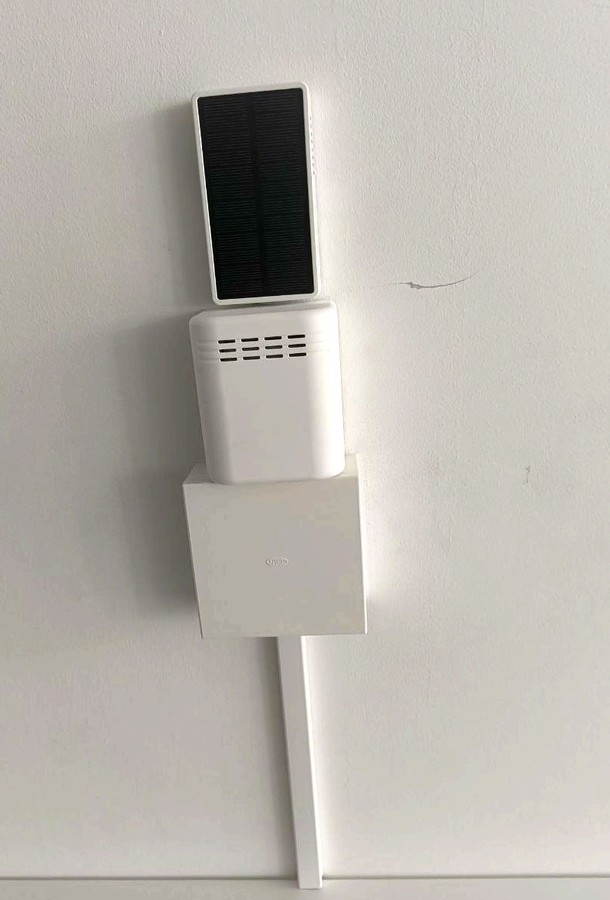 Two sensors per section, adhesive-mounted rather than wired. Photo: iWIP
Wi-Fi Becomes a Cell Site
The solutionAn EnOcean USB gateway plugged into a USB port turns every HPE Aruba access point into a wireless cell operating at 868 MHz. Forty-five access points were upgraded in this way. The Wi-Fi network transmits telemetry exclusively in encrypted form: no new SSIDs, no new VLANs, no new IP addresses.
Two sensors operate per area. The EnoSense® RADON is the world’s first radon sensor with EnOcean wireless technology, while the EnoSense® CO2 operates self-sufficiently via energy harvesting. The data flows through a WSS tunnel into the iWIP DATZN® platform.
Prior to the large-scale rollout, the EnoSense® RADON prototypes were tested in comparison measurements against reference equipment in collaboration with the ENAC-accredited laboratory FIMERALL.
The result
- 140 sensors in 70 areas across 14 buildings
- Rollout in four weeks, about 30 minutes per zone, including calibration
- No new network devices, SSIDs, VLANs, or IP addresses
- Continuous, verifiable measurement data during building operations
- Expansion without renovation: 150 zones in 29 buildings are planned
- Expandable to include occupancy, particulate matter, VOCs, and noise
“Protection against radon is an institutional responsibility toward our university community.”
Vicente Blanco Pérez
Vice Rector for Digital Transformation, University of La Laguna
Devices in this project
Two sensors per area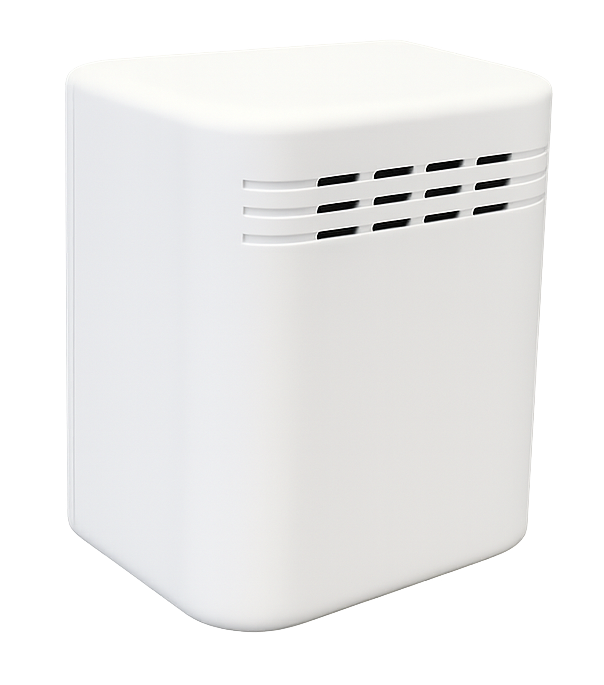 EnoSense® RADONThe world’s first radon sensor with EnOcean wireless, PoE, or 12 to 48 V DCData sheet and part numbers →
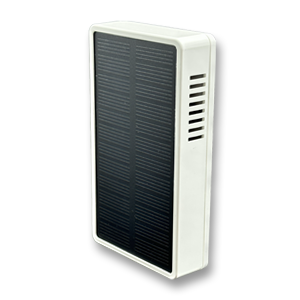 EnoSense® CO2CO2, humidity, and temperature; self-powered via solar cellData sheet and part numbers →
Partners: HPE Aruba, EnOcean Alliance, iWIP DATZN®, and GLOBALAN Telecomunicaciones. Source: EnOcean Alliance Case Study, University of La Laguna. Photos: © iWIP 2026.